
Blog

HOA & property management insights

Practical guidance for boards, managers, and community operators evaluating modern HOA software.

Statutory Digest
Virginia HOA

Virginia’s New Nonstock Corporation Act: Why Your Declaration Now Outranks Your Bylaws

Most Virginia HOAs and condominium associations are incorporated as nonstock corporations. That means they answer to two sets of rules: the community-association statutes (the Property Owners’ Association Act or the Condominium Act) and the Virginia Nonstock Corporation Act, which governs how the corporation itself runs. In 2026 the General Assembly rewrote that corporate statute. **SB 246 and HB 439**, passed unanimously and approved by the Governor in April 2026, make dozens of changes to the Act. They take effect January 1, 2027. Most of the bill is corporate housekeeping. One part matters directly to community associations. When your **declaration** (or condominium instruments) and your **articles of incorporation or bylaws** disagree about dues, assessments, fees, or membership, the declaration now wins. Here’s why that rule was needed, what it covers, and what it doesn’t.

MyFrontYard · September 23, 2026
Which States Actually Regulate HOAs? A 5-State Comparison
Compliance

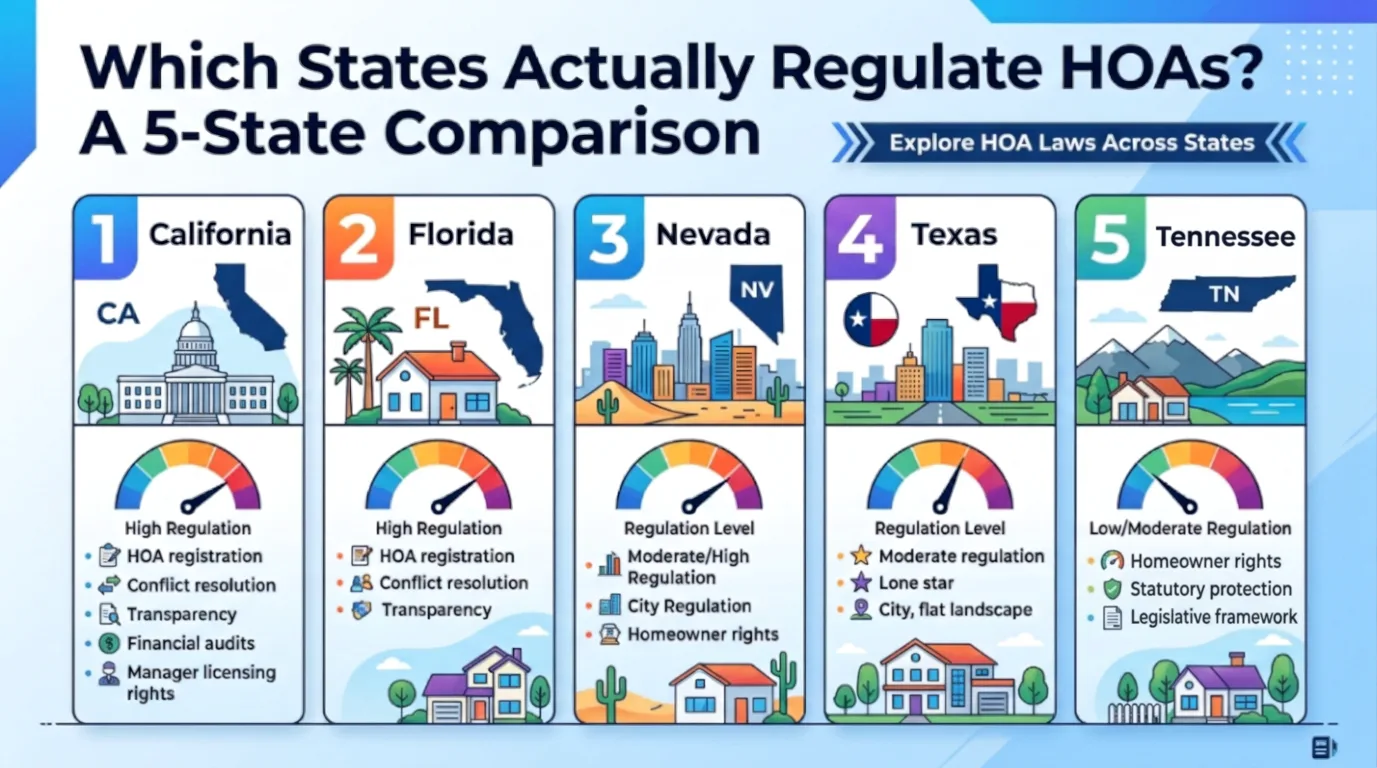
Which States Actually Regulate HOA's? A 5-State Comparison

Most homeowners assume that somewhere in state government, there's an office that oversees HOAs the way a banking regulator oversees banks, or a licensing board oversees contractors. Across Florida, Texas, Nevada, California, and Tennessee, that assumption is mostly wrong — and the exceptions are more interesting than the rule. Of these five states, only one has an agency that can investigate a board and discipline it. One more has a regulator, but its authority stops at the condominium property line. The other three route essentially everything through civil court, with no government office to call first.

MyFrontYard · September 22, 2026

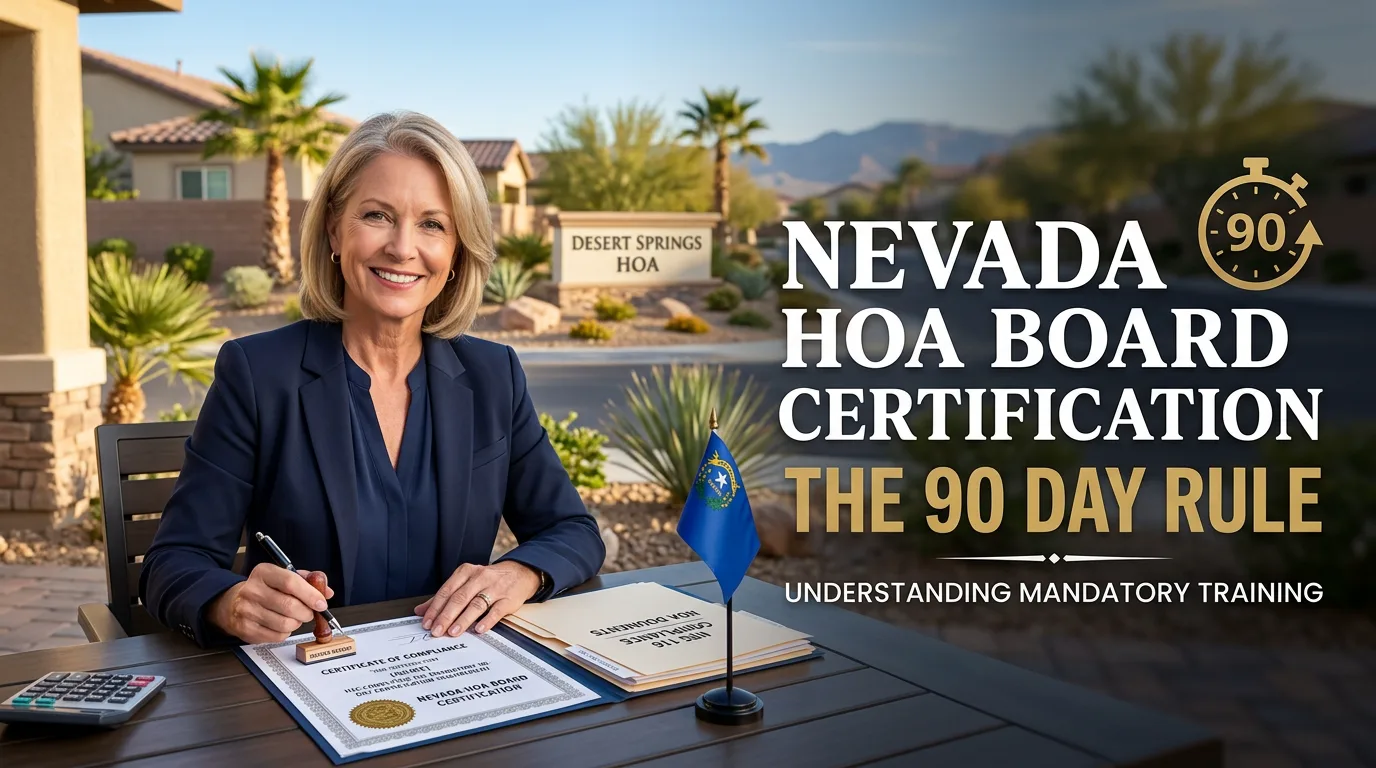
Nevada HOA Board Certification: The 90 Day Rule
Nevada HOA

Nevada HOA Board Certification: The 90-Day Rule New HOA Directors Miss

You just won a seat on your HOA's executive board. Congratulations — you now have a clock running. Nevada law gives every newly elected or appointed board member exactly **90 days** to file a written certification with the association confirming that they've read and understand the community's governing documents and the relevant provisions of NRS 116. Miss the deadline, and Nevada's Real Estate Division has the authority to treat it as a compliance violation against the association, not just an oversight by one director. Most new board members have never heard of this requirement until it's almost too late. Here's what it actually says, who it applies to, and how to stay on the right side of it.

MyFrontYard · September 18, 2026

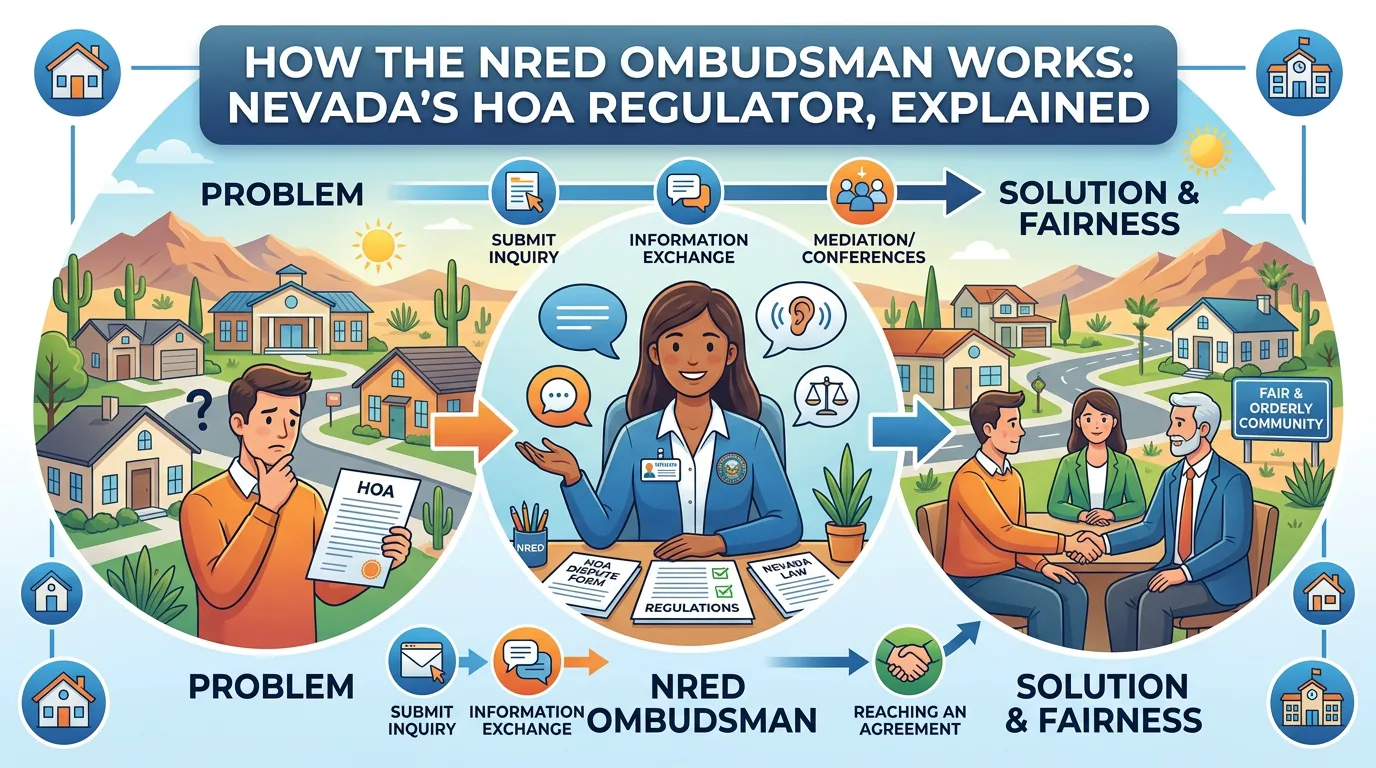
How the NRED Ombudsman Works: Nevada's HOA Regulator, Explained
Nevada HOA

How the NRED Ombudsman Works: Nevada's HOA Regulator, Explained

If you own a home in a Nevada HOA and something goes sideways — a records request gets ignored, a fine feels arbitrary, a board election looks off — you're not limited to hiring a lawyer or hoping the board comes around. Nevada is one of the few states in the country with a dedicated state regulator for HOAs, and understanding how it works can save you time, money, and a lot of frustration.

MyFront Yard · September 15, 2026

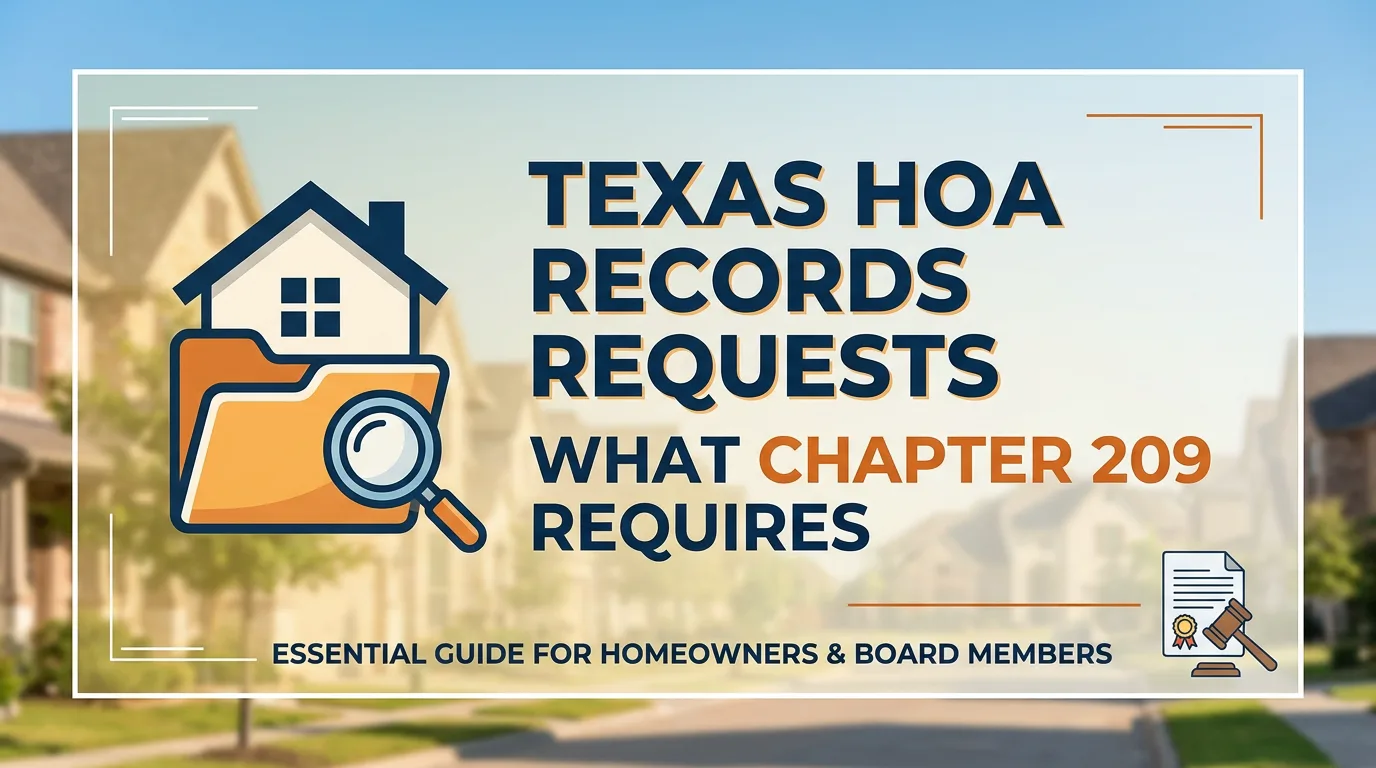
Texas HOA Records Requests: What Chapter 209 Requires
Texas HOA

Texas HOA Records Requests: What Chapter 209 Requires

If you've ever emailed your HOA asking to see the budget or the vendor contracts and gotten silence back, you're not imagining a problem. Texas actually gives homeowners a real, enforceable right to see association records — but the process only works if you follow it. Send the wrong kind of request to the wrong address, and the clock that's supposed to protect you never starts. This guide walks through what Section 209.005 of the Texas Property Code actually requires: what you can ask for, what the association can withhold, how to make a request that starts the legal deadline, and the specific two-step timeline that catches almost everyone off guard the first time.

MyFrontYard · September 11, 2026

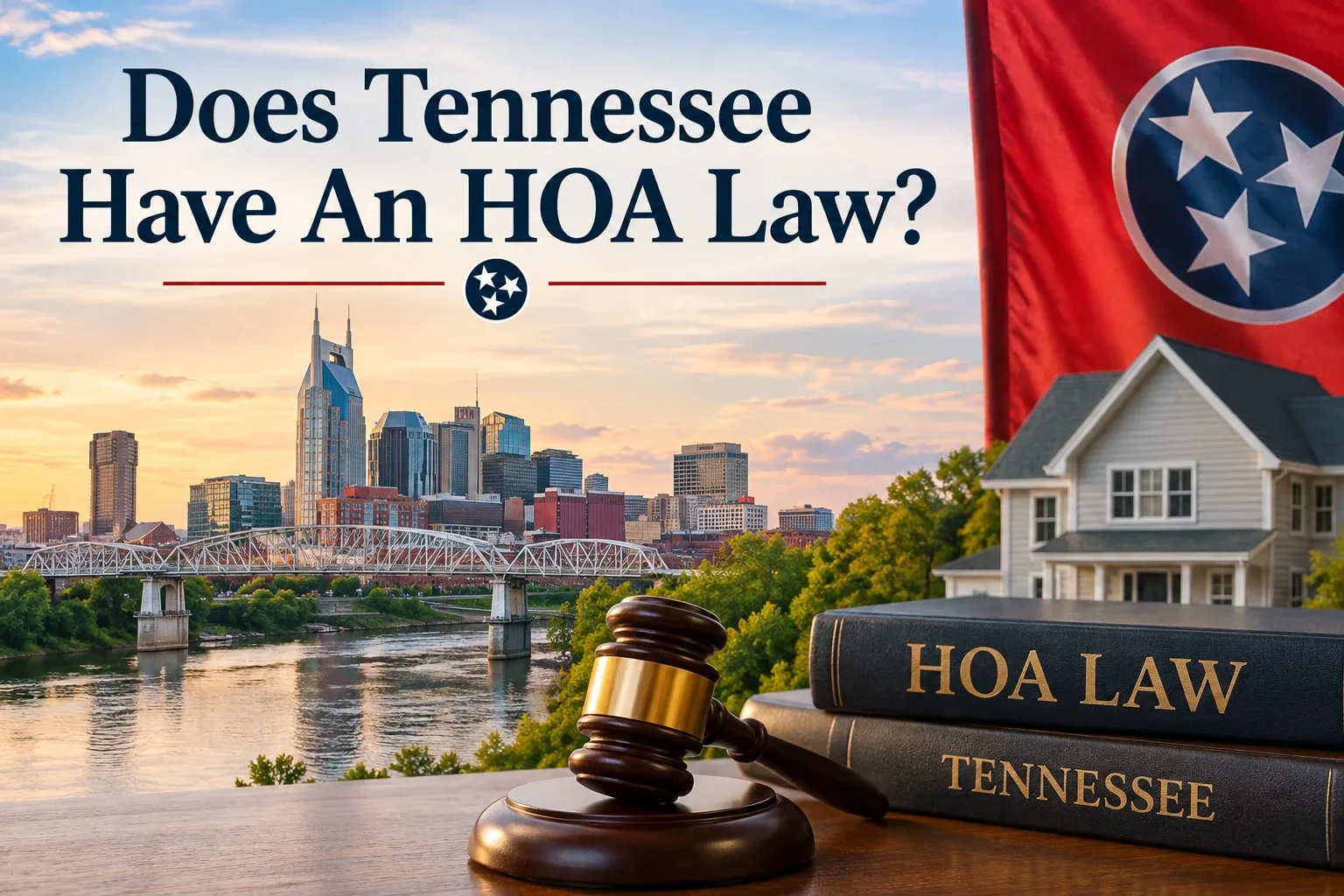
Does Tennessee Have An HOA Law
Tennessee HOA

Does Tennessee Have an HOA Law? What Actually Governs Your Association

Tennessee has no single, comprehensive homeowners' association act. There is no Volunteer State equivalent of Florida's Chapter 720, Texas's Chapter 209, or California's Davis-Stirling Act. If you are a board member searching for "the Tennessee HOA law" so you can look up your notice period or your fine cap, you will not find one, because it does not exist. What Tennessee has instead is a layered set of sources, and which ones apply to your community depends almost entirely on one question: is your community a condominium or not? Most of the confusion in online guidance comes from writers who never ask that question, then quote condominium statutes at single-family boards who are not covered by them. Here is the actual framework.

MyFrontYard · September 9, 2026

Florida HOA Website & App Requirements

The Florida HOA Website & App Requirement: What Associations With 100+ Parcels Must Post

Most coverage of Florida's HOA website mandate treats it as one more box to tick — a statutory chore that produces a page nobody visits. That framing misses what the requirement actually does. Every document an association posts is a document nobody has to formally request, and every request that never gets filed is a 10-business-day clock that never starts running. Associations that build the website as a real self-service resource end up with materially fewer records requests. Associations that treat it as a compliance artifact get the obligation without the benefit.

MyFrontYard · September 4, 2026

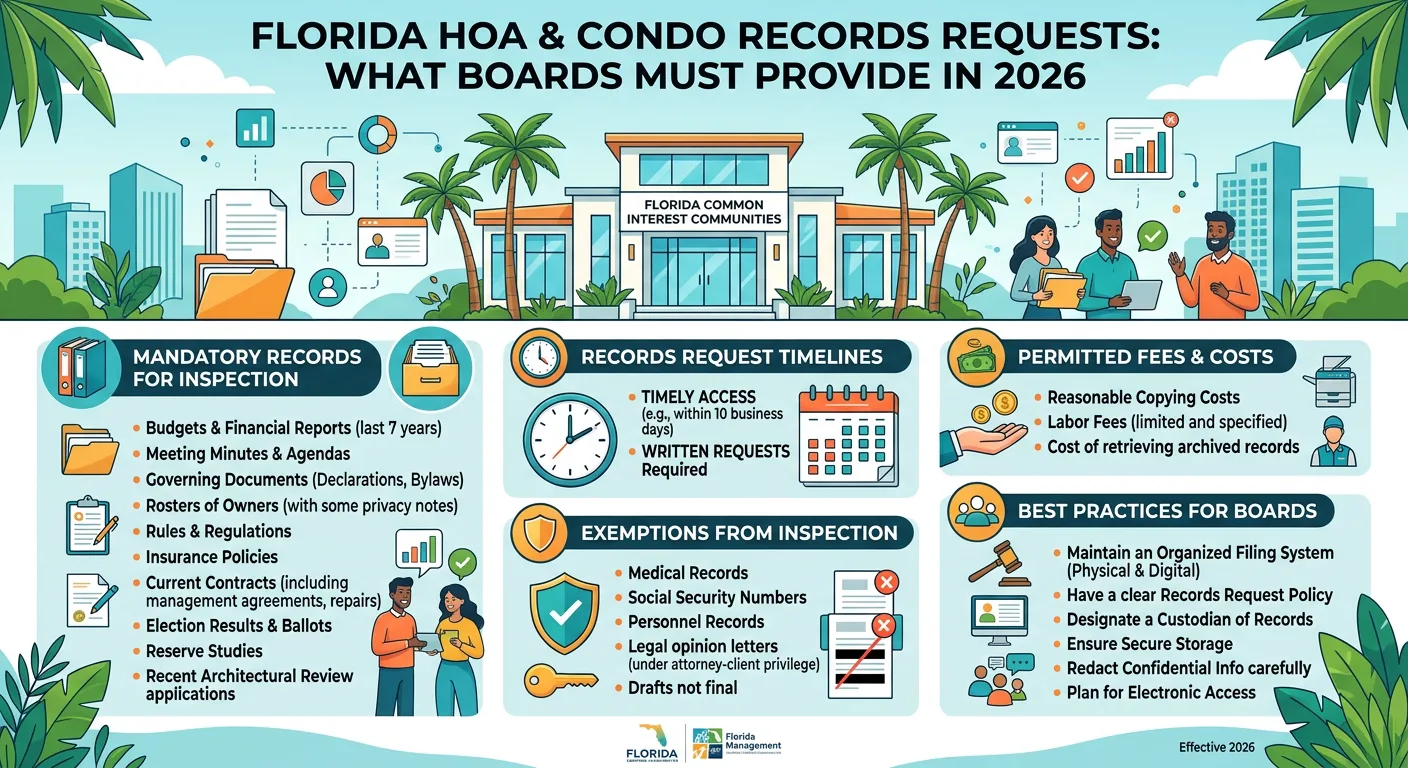
Florida HOA & Condo Records Requests: What Boards Must Provide in 2026

Florida HOA & Condo Records Requests: What Boards Must Provide in 2026

A written request lands in the HOA's inbox: an owner wants to see the reserve study, the last three board-meeting minutes, and the management contract. The clock is already running — and in Florida, most boards have less room to be slow, disorganized, or informal about the answer than they think. Records access is one of the most common compliance failures in Florida community association management. Not because boards are hiding anything, but because the documents are scattered across a management company's inbox, a board member's laptop, and a filing cabinet nobody has opened since the last treasurer resigned. The law doesn't care why the records are hard to find. It cares whether they showed up in time.

MyFrontYard · September 2, 2026

Why Are HOA and Condo Assessments Going Up?

If your association's dues have crept up in recent years, you're far from alone. Recent reporting points to two connected pressures facing HOAs and condo associations nationwide: rising costs on one side, and tightening lender expectations on the other. Understanding both helps explain why assessment increases — however unwelcome — are often less about board mismanagement and more about the underlying math.

Jim Slaughter, Law Firm Carolinas · August 16, 2026

PreviousPage 3 of 4Next